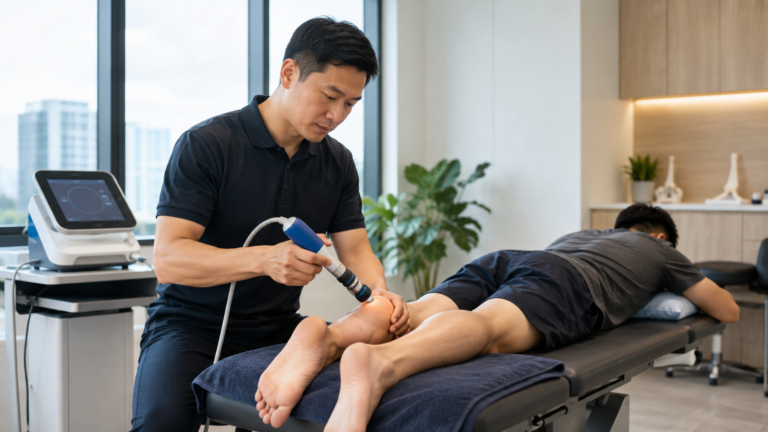


Office Syndrome is a non-clinical term used to describe a collection of painful musculoskeletal and visual symptoms, including chronic back pain, headaches, and neck stiffness that are caused by prolonged, repetitive, and often improper posture typical of an office or desk-bound work environment.
When muscles become stiff and inflamed from this stress, they often require advanced therapeutic techniques like EMS therapy helps to restore circulation and alleviate pain, a foundational element of spinal health we understand deeply at Tio Chiro Physio, especially when focusing on rapid muscle recovery and pain relief for our adult clientele.
Why Do Office Workers Always Have Back Pain?

Prolonged sitting is a major contributing factor to back discomfort, with studies indicating that more than 50% of individuals in desk-based jobs in Malaysia report some degree of lower back and neck discomfort. For many, that nagging stiffness or sharp twinge is the first, persistent sign of Office Syndrome.
As humans, we are simply not designed to sit for eight hours straight. When you settle in for a long workday, your primary stabilising muscles — the glutes, deep core, and upper back retractors effectively switch off or become inhibited. This forces your smaller, more delicate postural muscles in your neck, shoulders, and upper back to bear the entire load, leading to chronic tension, strain, and inflammation.
What Happens If You Sit Down For Too Long?
Prolonged sitting in an office or a car systematically wears down the body’s structural integrity. When a muscle is held in a slightly contracted position for an extended time (like holding your head up to look at a monitor), blood flow is restricted. This causes what is known as a prolonged static load found in office workers.
The lack of circulation causes the buildup of metabolic waste and inflammatory compounds, leading to the formation of painful, hard nodules in the muscle known as trigger points. Over time, this results in Myofascial Pain Syndrome, which is the clinical hallmark of chronic Office Syndrome.
Secondly, the constant forward-leaning or slouched posture causes a severe forward shift in the head’s centre of gravity. For every inch your head moves forward, the weight your neck muscles must support increases dramatically, placing tremendous, unnecessary stress on the cervical spine and surrounding tissues.
In addition, repetitive micro-movements, such as constant mouse-clicking or typing without proper wrist support, can cause inflammation in tendons and nerves, leading to conditions like Carpal Tunnel Syndrome or Tendinitis, which are severe manifestations of the ailment.
Telltale Signs of Your Body In Pain

The symptoms you experience are your body’s distress signal, directly linked to your poor body posture. Look out for these signs that indicate your body has reached its breaking point:
Neck and Shoulder Stiffness
This is the most common symptom, manifesting as persistent tightness and achiness across the upper trapezius muscles due to the head-forward and rounded-shoulder posture. This chronic tension is often the direct cause of tension headaches that radiate from the base of the skull.
Persistent Back Pain (Upper & Lower)
Slouching deactivates your deep core muscles and puts significant compressive force on the lumbar discs, which is the main source of lower back pain. Simultaneously, rounding the upper back (kyphosis) overstretches and fatigues the muscles between the shoulder blades, causing deep, burning discomfort.
Tingling and Numbness in Limbs
This is a crucial warning sign that muscle stiffness or spinal misalignment is beginning to compress or irritate nerves. Numbness in the fingers or hands, particularly, can indicate nerve impingement in the neck (cervical radiculopathy) or a localised compression issue at the wrist.
Headaches and Eye Strain
Headaches that are worse at the end of the workday almost always originate from the tight muscles at the base of the skull, a classic side effect of prolonged screen focus combined with a strained neck position.
What Happens To Your Body If Office Syndrome Is Left Untreated?

The acute aches and stiffness you feel daily are merely warning shots. If you persistently ignore the signs of Office Syndrome pain and continue, the temporary discomfort progresses into serious, chronic conditions that are much harder to reverse.
Spinal and Disc Degeneration
One of the most concerning long-term consequences is the accelerated wear and tear on your spinal discs. Prolonged sitting with a slouched posture places uneven pressure on the discs in your lower back (lumbar spine) and neck (cervical spine). Over the years, this sustained pressure can lead to disc desiccation (drying out) and bulging or herniation. This progression not only causes severe, radiating pain (sciatica or cervical radiculopathy) but also contributes to early-onset osteoarthritis in the spine, drastically reducing mobility and quality of life.
Chronic Muscle Imbalances and Weakness
Ignoring the pain means you are allowing chronic muscle imbalances to become permanent. The muscles in the front of your body (pectorals, hip flexors) become severely short and tight, while the muscles in the back (mid-back stabilisers, glutes, core) become stretched, weak, and inhibited. This structural imbalance makes holding correct posture impossible without conscious effort and increases the risk of acute injury, such as a severe muscle tear or ligament sprain.
Neurological and Systemic Issues
Beyond the skeletal structure, chronic tension can lead to neurological issues. Constant compression or irritation of the nerves in the neck or wrists can cause permanent nerve damage, leading to debilitating conditions like severe Carpal Tunnel Syndrome that require surgical intervention. Furthermore, the lack of physical activity and the associated stress, both core causes of office syndrome, are linked to systemic health risks, including metabolic syndrome, increased risk of cardiovascular disease, and chronic fatigue.
How to Prevent Office Syndrome From Happening

Preventing Office Syndrome is a daily commitment, not a one-time fix. It’s about creating new, healthy habits that counteract the inevitable stress of a desk job. This holistic approach is your best defence against chronic pain.
Get An Ergonomic Chair With Lumbar Support
To correct your body’s alignment and support good body posture, focus on these three ergonomic principles for your workstation:
Start with your chair: ensure your hips are slightly higher than your knees or at least at a 90-degree angle, with your feet flat on the floor or a stable footrest. This simple adjustment ensures a more neutral spinal curve, immediately taking pressure off your lower back. Next, your screen must be positioned so the top third of the monitor is at eye level, and it should be an arm’s length away.
This prevents you from craning your neck forward or hunching over, which is the primary cause of neck strain and resulting tension headaches. Finally, your keyboard and mouse should be situated close to your body, allowing your elbows to remain close to your sides at a 90–100 degree angle. This proximity minimises the repetitive strain on your shoulders and wrists, supporting the longevity of the joints and tendons.
Do Some Stretches at Your Desk From Time to Time
Incorporating movement throughout the day is non-negotiable for prevention. You need to take a micro-break (30 seconds) every 30 minutes, and a longer, deliberate break (5 minutes) every hour.
To relieve neck tension and correct a forward head posture, perform the Chin Tuck. Sit tall and gently draw your chin straight back, as if you are trying to make a slight double chin, feeling the deep stretch at the base of your skull. Hold for three seconds and release; repeat ten times to strengthen the deep neck flexors and actively combat the strain caused by staring at a screen. For the upper back and chest, perform the Chest Opener. Interlace your fingers behind your back (or grab a towel if needed), gently pull your hands down, and lift your chest up, squeezing your shoulder blades together.
This action counteracts the constant rounding (protraction) that happens when typing and stretches the tight chest muscles, helping alleviate chronic pain between the shoulder blades. To mobilise the spine and relieve the root of back pain, perform a seated lumbar rotation: sit tall, gently turn your torso to one side, holding the back of your chair for support, holding for a deep breath on each side.
What Are My Treatment Options For Office Syndrome in Petaling Jaya?

While prevention and postural corrections are the first line of defence, persistent office syndrome pain requires professional intervention to correct underlying muscular and joint dysfunctions. At Tio Chiro Physio in Petaling Jaya, we utilise a range of advanced, evidence-based treatments designed to rapidly relieve pain and provide long-term structural correction. We tailor a holistic plan that may include the following specific modalities:
EMS Therapy
For muscles that are tight, painful, and prone to spasm, Electrical Muscle Stimulation (EMS) Therapy offers targeted relief. This treatment involves applying small, controlled electrical impulses to the affected muscles. The current helps to rapidly increase blood circulation, flush out accumulated metabolic waste (like lactic acid) that contributes to trigger point formation, and can either stimulate weak muscles to contract or flood painful areas with sensory input to block pain signals.
For patients suffering from chronic tension in the neck, upper back, and lower back, learn more about how EMS Therapy in Petaling Jaya is highly effective in providing a non-invasive way to calm down irritated muscles and accelerate the healing process.
Dry Needling
For chronic cases where pain is intense and persistent, advanced techniques are often required to break the cycle of muscle stiffness and inflammation that typical stretching cannot penetrate. One of the most effective methods for targeting deep, entrenched muscle knots (trigger points) is dry needling.
This precise technique involves inserting a fine needle into the muscle’s hyper-irritable trigger point to elicit a twitch response, effectively releasing the knot and restoring normal muscle function. This technique is particularly powerful for stubborn neck and upper back pain that has not responded well to traditional massage or stretching, as it targets the deeper layers of muscle tissue, often providing immediate, lasting relief.
Activator Method
Addressing spinal and joint alignment is critical for correcting the root causes of office syndrome. The Activator Method is a low-force, instrumental chiropractic adjusting technique used to gently restore proper movement to spinal and extremity joints. Instead of manual manipulation, the chiropractor uses a small, hand-held instrument that delivers a fast, precise impulse. This low-force approach is highly effective for patients who may prefer a gentler adjustment, as it targets specific joint restrictions without excessive force. By improving joint mechanics, the Activator Method reduces nerve irritation and muscular tension, complementing the soft tissue work from therapies like EMS and Dry Needling to achieve full recovery.