
A stroke can change the way a person moves, walks, speaks, balances, and performs daily activities. For many stroke survivors and family members, one of the biggest questions is: “How long will recovery take?”
The honest answer is that stroke recovery is different for everyone. Some people regain function within weeks, while others need months or even years of rehabilitation. The good news is that physiotherapy such as stroke rehabilitation can play a major role in helping stroke survivors rebuild strength, improve movement, reduce stiffness, and regain independence.
At TIO Chiro & Physio Center in Petaling Jaya, physiotherapy focuses on helping patients move better, feel more confident, and work towards realistic recovery goals after stroke.
Why Physiotherapy Is Central to Stroke Recovery
A stroke occurs when blood flow to a part of the brain is interrupted either by a blockage (ischaemic stroke, which accounts for roughly 80% of cases) or by bleeding in the brain (haemorrhagic stroke). When brain cells are deprived of oxygen, they begin to die within minutes. This can affect the brain’s ability to control movement, balance, coordination, speech, sensation, and daily function.
What physiotherapy targets is the brain’s ability to repair itself through a process called neuroplasticity, the capacity of the brain to form new neural connections and essentially rewire itself around the damaged area. This is not a passive process. It requires deliberate, repetitive, progressive movement and exercise to stimulate the brain into building those new pathways.
When Should Physiotherapy Start After Stroke?
Physiotherapy usually starts once the patient is medically stable and cleared by the hospital team. In many cases, early rehabilitation begins while the patient is still in hospital.
Early physiotherapy may include simple movements, positioning, sitting balance, bed mobility, standing practice, and walking support. The goal is not to rush recovery, but to help the brain and body start relearning safe movement as early as possible.
After discharge, outpatient physiotherapy can continue the recovery process by focusing on strength, balance, walking, coordination, and daily function.
What Happens During a Stroke Physiotherapy Session
A physiotherapy session after a stroke usually begins with an assessment. The physiotherapist will check movement, strength, balance, walking ability, joint mobility, muscle tone, posture, and functional ability.
From that assessment, a structured treatment plan is developed. Here is what most programmes include:
1. Strength and Movement Training
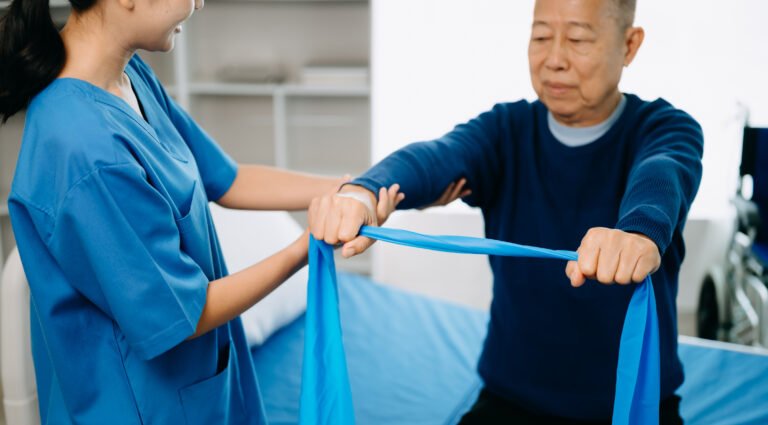
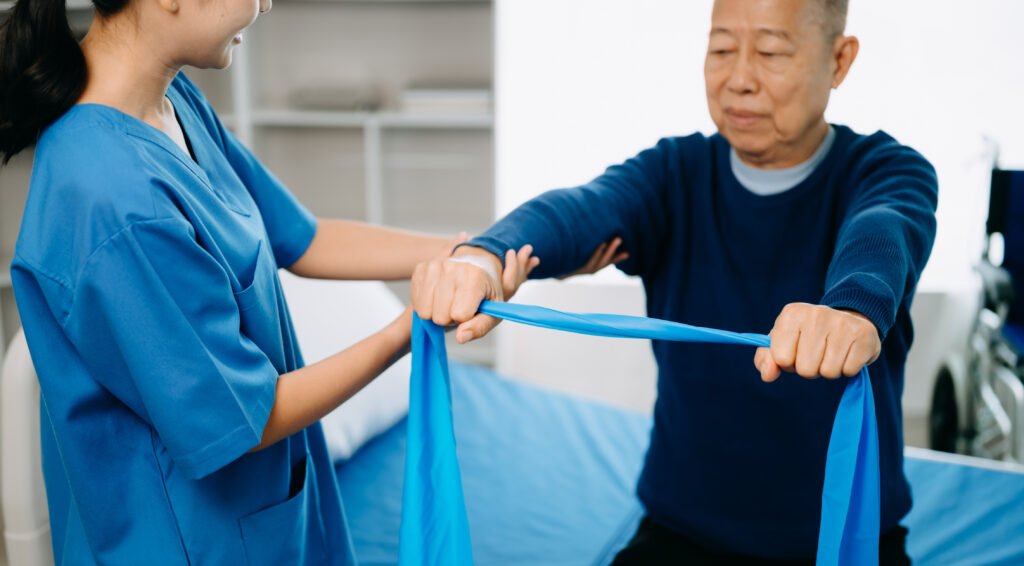
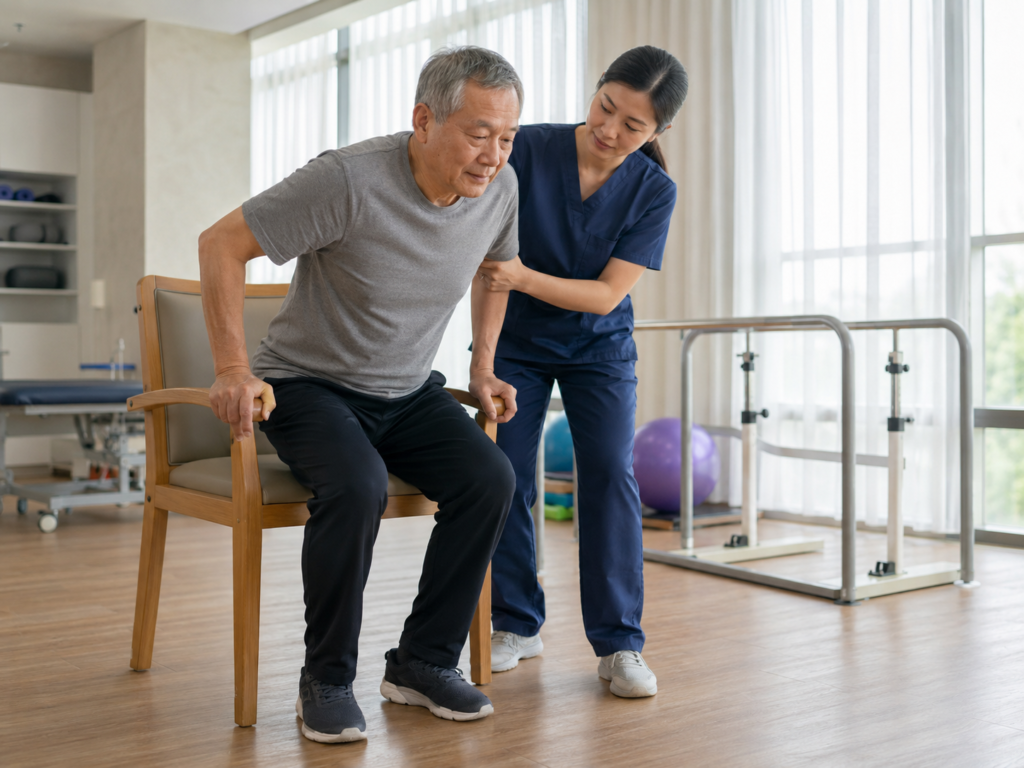 Stroke can cause weakness, especially on one side of the body. Physiotherapy helps retrain affected muscles through guided exercises, repeated movements, and functional strengthening.
This may include leg strengthening, arm exercises, sit-to-stand practice, step training, and controlled weight shifting.
2. Balance and Coordination Exercises
Many stroke survivors feel unsteady when sitting, standing, or walking. Balance training helps improve body awareness, posture control, and confidence during movement.
Exercises may start with supported standing and progress towards walking, turning, stepping, or reaching tasks.
3. Walking and Gait Training
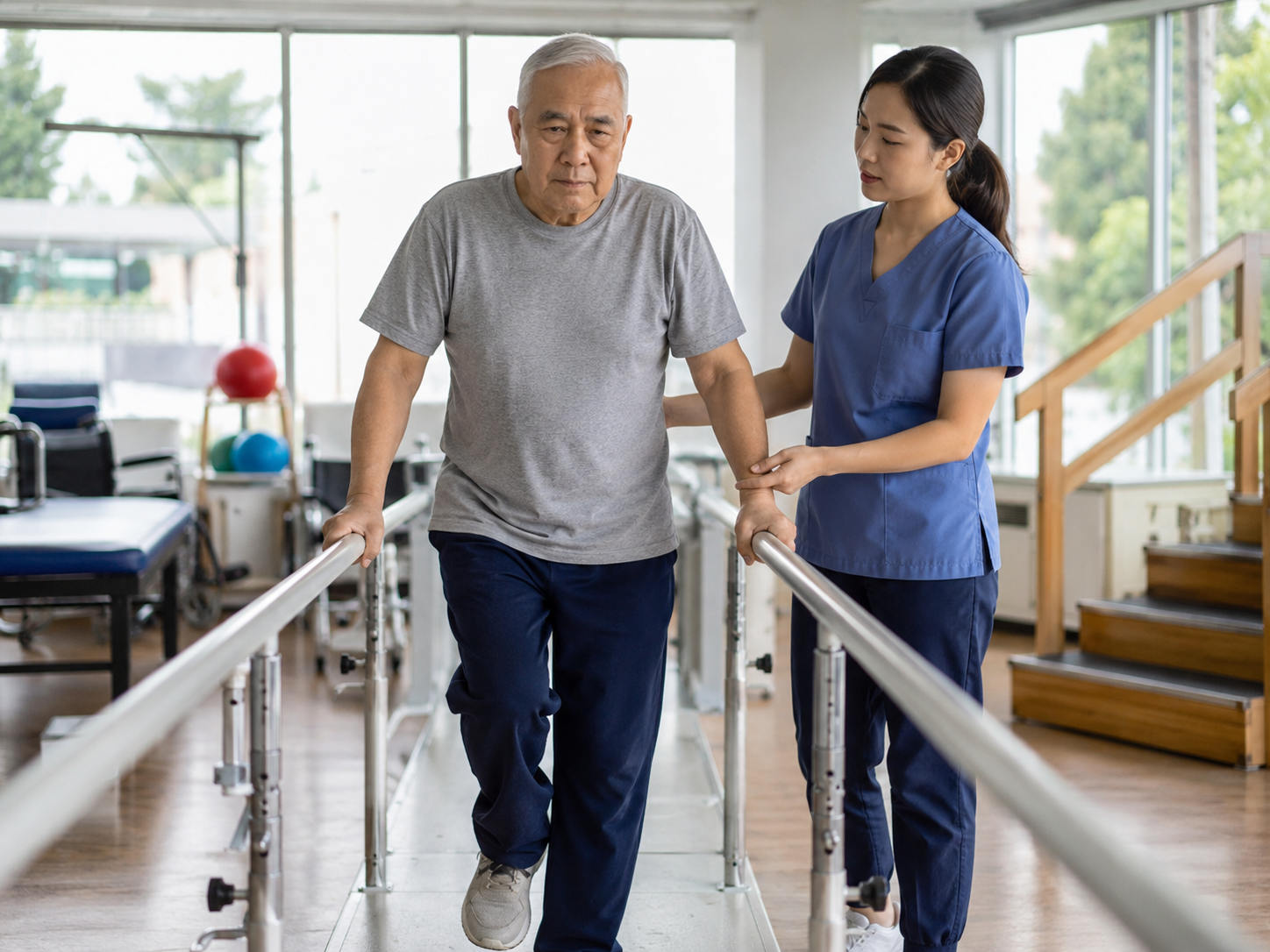
If walking is affected, physiotherapy can help retrain a safer and more efficient walking pattern.
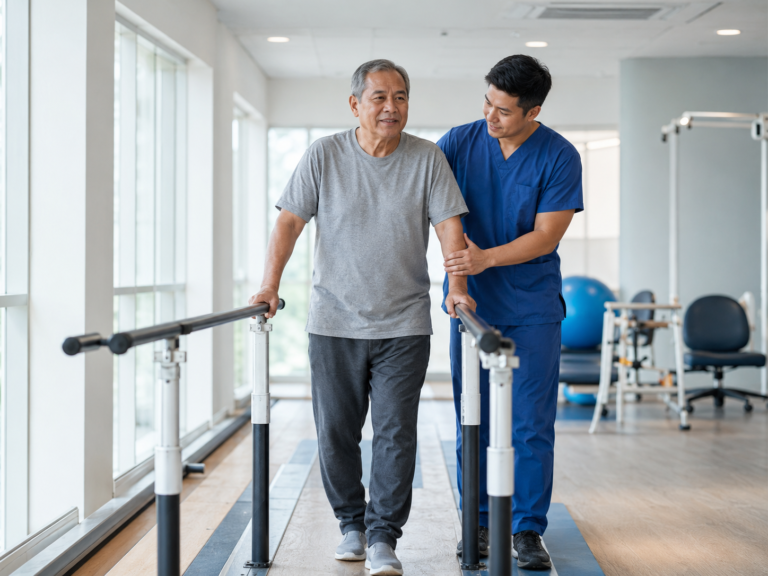
Gait training may involve exercises that progressively rebuild the coordination, strength, and balance needed for walking such as parallel bars, walking aids, step practice, treadmill work, or guided walking exercises depending on the patient’s ability and safety level.
4. Stretching and Spasticity Management
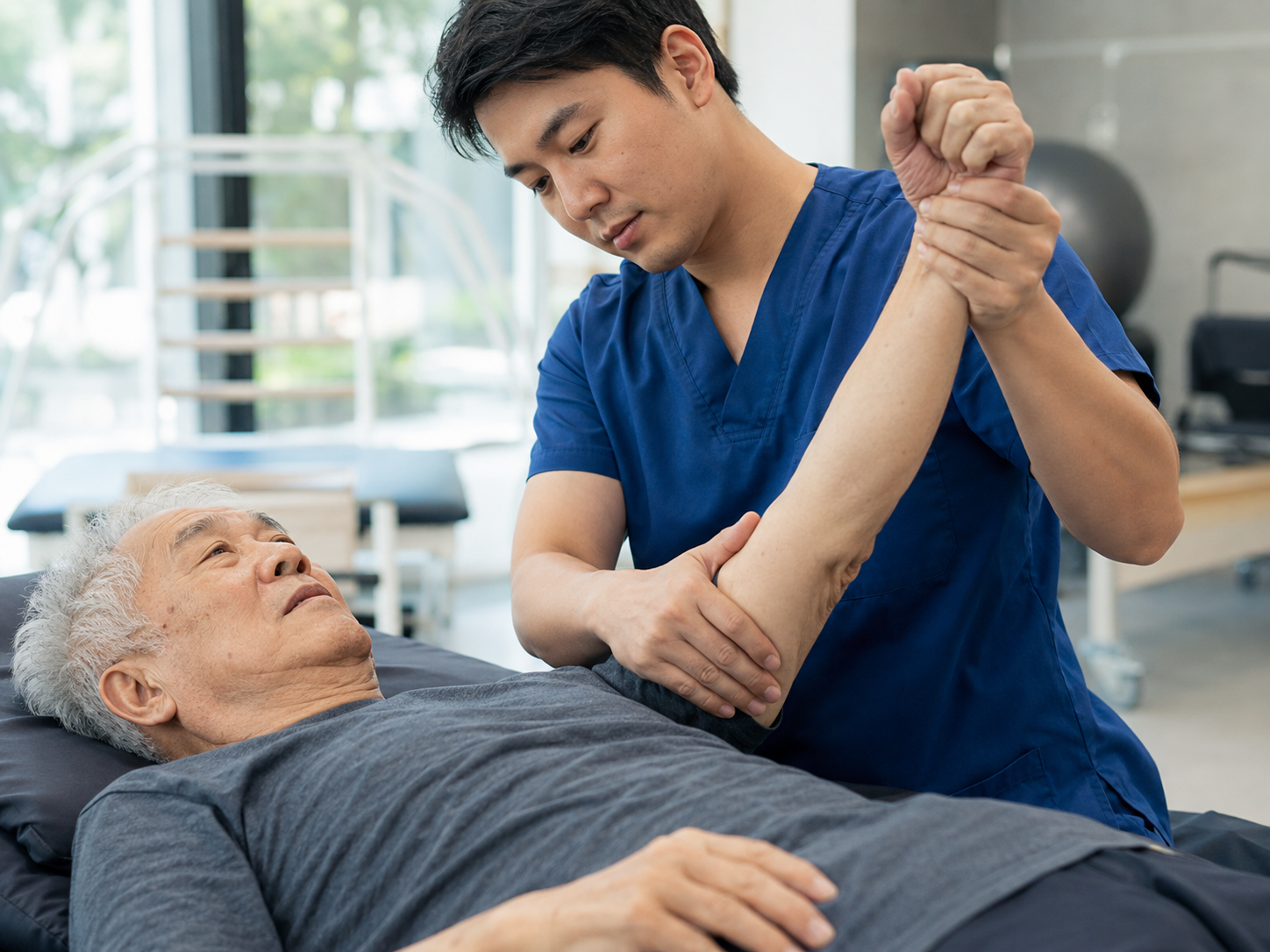
Some stroke survivors develop muscle stiffness or tightness, commonly in the arm, hand, calf, or hip. Physiotherapy may include stretching, positioning advice, mobility exercises, and movement retraining to help reduce stiffness and improve comfort.
5. Functional Training for Daily Activities
The aim of stroke physiotherapy is not just exercise, it is helping the patient return to daily life.
This may include practising how to get out of bed, stand from a chair, walk to the bathroom, climb stairs, carry light items, or move safely around the home.
6. Home Exercise Guidance
Recovery does not only happen during clinic sessions. Stroke rehabilitation often requires consistent practice at home.
A physiotherapist may provide simple exercises for strength, balance, mobility, and stretching so the patient can continue progressing between sessions.
7. Electrical muscle stimulation (EMS)
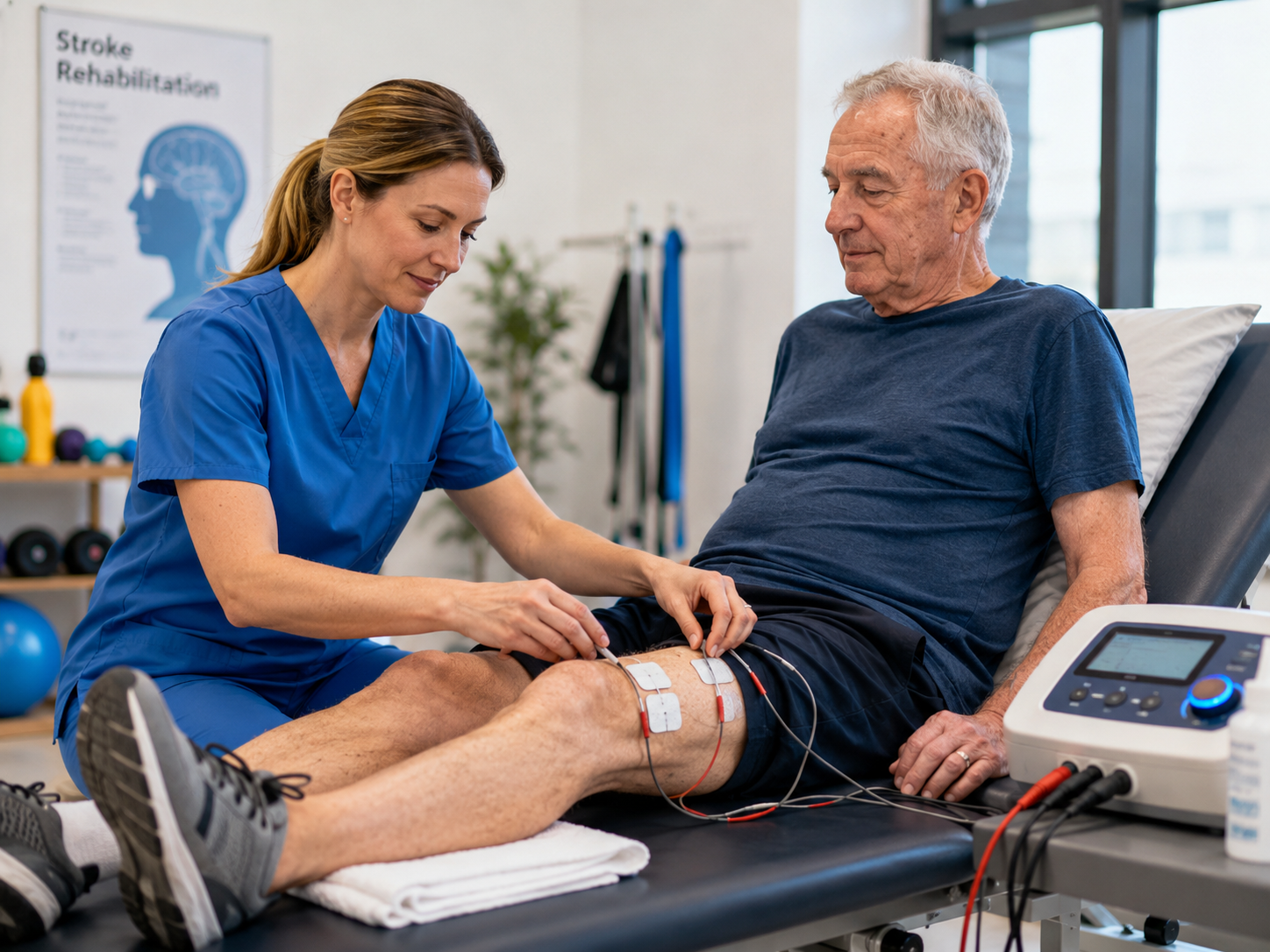
EMS therapy is the use of low-level electrical current to stimulate muscle contractions and is increasingly used as a complement to conventional physiotherapy in stroke rehabilitation. By artificially activating muscles that the brain currently cannot reliably control, EMS helps maintain muscle health, reduces atrophy, and supports the neuroplastic rewiring process. It is particularly useful in the early stages of recovery when voluntary movement is limited.
How Long Does Stroke Recovery Take?
Stroke recovery depends on several factors, including the severity of the stroke, the area of the brain affected, the patient’s age, general health, motivation, family support, and how consistently rehabilitation is followed.
A general timeline may look like this:
First Few Days to Weeks
The first stage focuses on medical stabilisation, early movement, preventing complications, and beginning basic rehabilitation. Patients may work on sitting, standing, bed mobility, gentle exercises, and assisted walking.
First 1 to 3 Months
This is often an important period for recovery. Many patients experience noticeable improvements in strength, movement, and independence during this stage, especially with regular rehabilitation.
Physiotherapy may become more active, with a stronger focus on walking, balance, coordination, and functional training.
3 to 6 Months
Recovery can continue steadily. Patients may work on improving walking distance, stair climbing, endurance, arm function, balance, and confidence in daily activities.
Some people may return to parts of their normal routine during this period, while others may still need ongoing support.
6 Months and Beyond
Recovery does not automatically stop after six months. Many stroke survivors continue improving with long-term physiotherapy, home exercises, and consistent practice.
At this stage, physiotherapy may focus on maintaining mobility, improving independence, reducing fall risk, managing stiffness, and helping the patient stay active.
The Role of Family in Stroke Recovery
Family members typically carry a significant part of the caregiving responsibility after a stroke. This is both a strength and a source of enormous pressure.
The most important thing families can do, beyond providing emotional support, is to help the survivor maintain consistency between clinic sessions. Physiotherapists will often prescribe simple and safe home exercise programmes that reinforce what is being worked on in the clinic. Doing these exercises daily, even briefly, is one of the most evidence-supported ways to accelerate recovery.
Equally important is creating a safe home environment such as removing trip hazards, installing grab rails in the bathroom, ensuring the survivor has appropriate assistive equipment. The goal is maximising independence without maximising fall risk.
When to Seek Urgent Medical Help
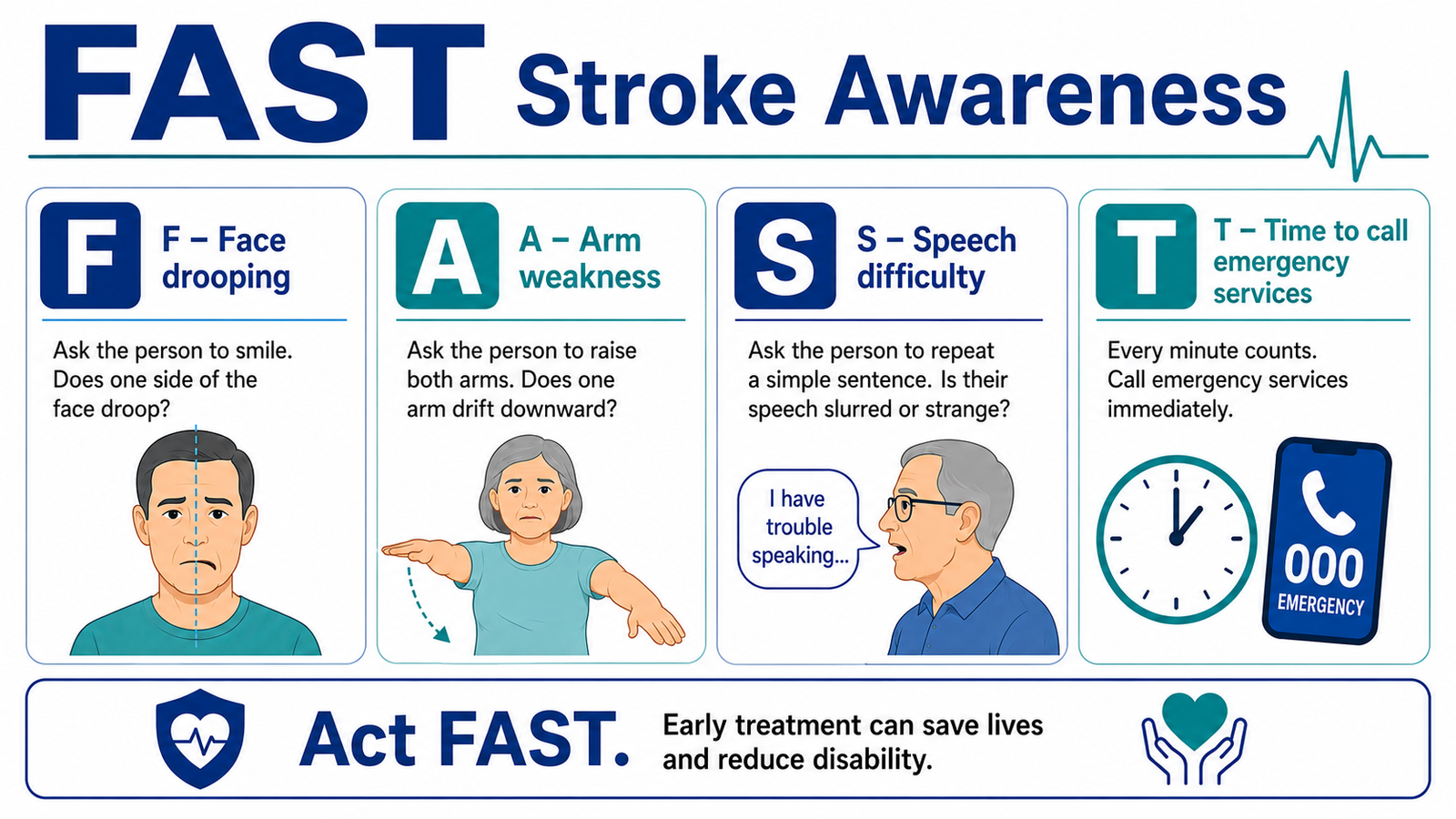
Physiotherapy is for rehabilitation after medical care. If someone shows sudden stroke symptoms, seek emergency medical help immediately.
Watch for sudden facial drooping, arm weakness, speech difficulty, confusion, severe headache, dizziness, or loss of balance. Stroke is a medical emergency, and fast treatment can save lives.