

If you’ve ever caught yourself slouching at your desk or feeling that nagging tightness in your lower back, you’re not alone. Modern lifestyles like long hours sitting, staring at screens, and minimal movement have made poor posture almost the norm.
That’s where Electrical Muscle Stimulation (EMS) therapy comes in. It is used mainly in rehabilitation clinics, EMS is now gaining attention as a tool for improving posture, strengthening the core, and activating muscles more effectively.
What Is EMS Treatment?
Electrical Muscle Stimulation (EMS) is a therapeutic technique that uses low-level electrical impulses to trigger muscle contractions. These impulses mimic the signals your brain naturally sends to your muscles during movement.
In a typical session, electrodes are placed on the skin over specific muscle groups. When activated, they cause the muscles to contract without you needing to consciously engage them. Unlike traditional workouts, EMS can:
- Activate multiple muscle groups at once
- Reach deeper muscles that are harder to engage
- Deliver a workout in a shorter amount of time
How EMS Improves Posture
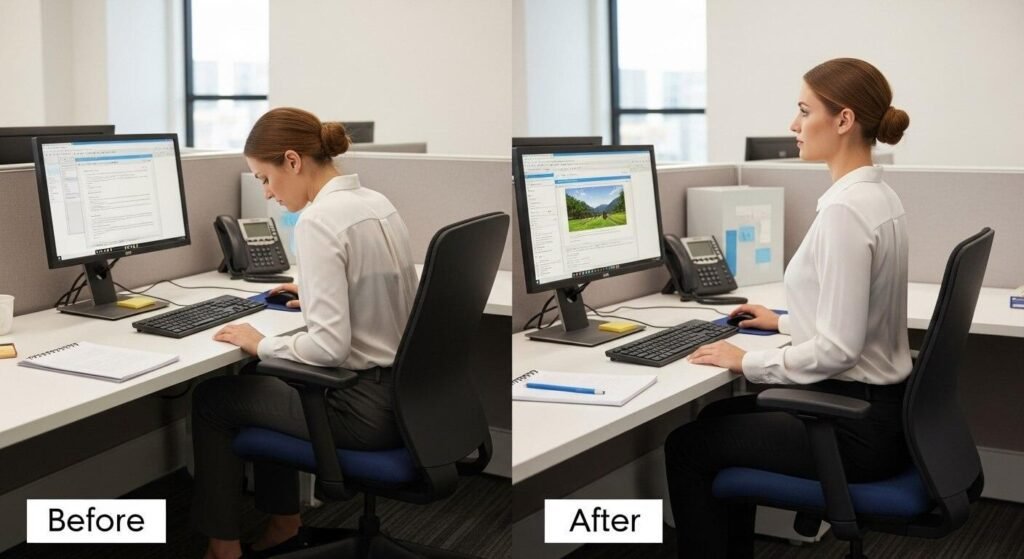
Poor posture isn’t just a bad habit. In most adults, especially those spending 8 to 10 hours a day in front of screens, it’s a neuromuscular problem whereby certain postural muscles have become chronically inhibited while opposing muscles have become overactive and tight.This is where EMS becomes genuinely powerful.
Activating Deep Stabilizing Muscles
Deep inside your core are muscles that don’t get much attention but they do a lot of heavy lifting when it comes to posture. Transverse abdominis (your body’s natural “corset”) and Multifidus (small muscles that stabilize your spine) are responsible for keeping your spine steady and supported during everyday movements whether you’re sitting, standing, or walking. However, they are hard to activate on purpose.
EMS helps bridge that gap by sending electrical impulses directly to these muscles to activate them without relying on your conscious effort. Once these muscles start engaging properly, your body has a much stronger foundation to maintain good posture.
Strengthening Postural Muscles
Posture is a team effort. It involves a group of muscles working together to keep your body upright and balanced which include core muscles, lower back muscles, glutes, upper back and shoulder stabilizers. When these muscles are weak or fatigued, your body starts to compensate and causes you to lean forward, round your shoulders, or arch your lower back without even noticing.
EMS helps strengthen these muscles by:
- Creating consistent, controlled contractions
- Engaging multiple muscle groups at the same time
- Increasing muscle endurance over repeated sessions
Over time, this can make a real difference in how your body holds itself. Instead of constantly reminding yourself to fix your posture, you may find that your body starts to default to a more natural and upright position.
Correcting Muscle Imbalances
Posture problems aren’t just caused by weak muscles, they’re often caused by imbalances.
For example:
- Tight chest muscles + weak upper back → rounded shoulders
- Overactive hip flexors + weak glutes → tilted pelvis
- Dominant lower back + weak core → poor spinal support
When certain muscles are overworking while others are underperforming, your body falls out of alignment. EMS can help restore balance by targeting underactive muscles that are difficult to engage,reducing overcompensation from stronger muscle groups and encouraging more even muscle recruitment patterns.
EMS for Core Strength
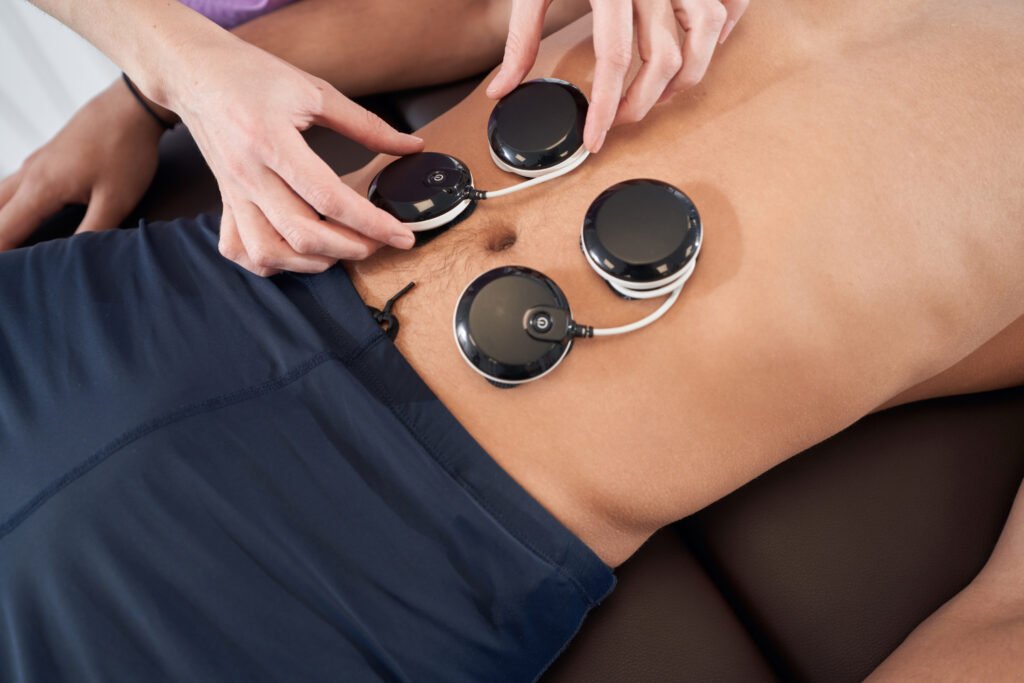
When most people think of core workouts, they picture planks, crunches, or sit-ups. However, not all core muscles are easy to activate consciously. EMS helps on:
Deep Muscle Activation
EMS can stimulate deeper muscles bypassing the need for perfect technique or awareness instead of guessing whether you’re activating the right muscles.
Simultaneous Engagement
Instead of isolating one muscle group at a time, EMS can activate multiple layers of muscle at once including:
- Deep core stabilizers
- Surface abdominal muscles
- Lower back muscles
- Supporting muscles around the hips
Time Efficiency
A typical EMS session can last around 20 minutes, yet it may engage muscles as intensely as a longer traditional workout which makes it appealing for people who are short on time or those who struggle to feel their core working during exercises.
EMS for Muscle Activation
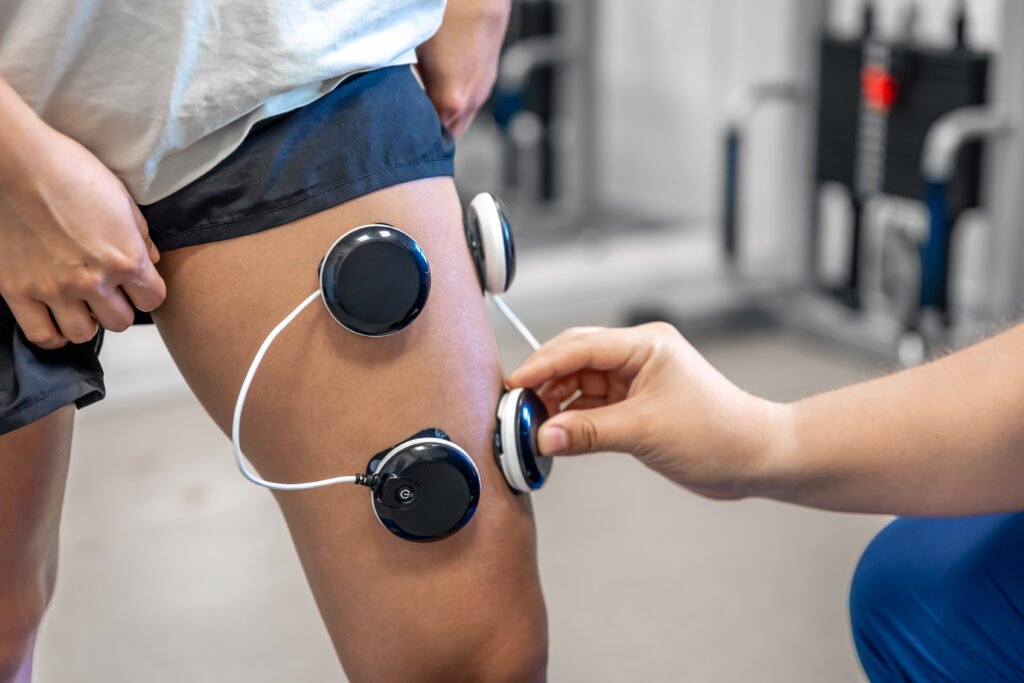
One of the biggest advantages of EMS is how it improves muscle activation which is often overlooked in traditional fitness.
Better Mind-Muscle Connection
Some muscles, especially those that have been inactive due to long hours of sitting or poor movement habits, can feel almost “switched off.” EMS helps by directly stimulating the muscle, creating a strong, noticeable contraction. Over time, this can help your brain relearn how to engage that muscle on its own.
Faster Muscle Engagement
In a typical workout, your body recruits muscle fibers gradually. Smaller, less powerful fibers activate first, and as the demand increases, larger fibers join in. EMS speeds up this process by stimulating a greater number of muscle fibers at once, including those that are harder to recruit voluntarily.
Enhanced Workout Efficiency
When muscles are properly activated, movements become more controlled. The right muscles take on the workload and your body becomes more efficient overall.
Who Should Consider EMS Therapy?
EMS is such a versatile clinical tool because of its broad applicability. It can be adapted for almost anyone from athletes seeking performance gains to older adults rebuilding muscle after prolonged bed rest.
Office Workers
If you spend hours sitting with a forward head posture, rounded shoulders, and mid-back pain, EMS can help counteract the effects of prolonged inactivity.
People With Back Pain
Weak core muscles are often linked to lower back discomfort. EMS can help strengthen those areas.
Athletes and Active Individuals
EMS can improve muscle activation by correcting muscular imbalances, accelerating recovery, and enhancing neuromuscular efficiency for performance.
Beginners
If you struggle to feel your muscles during workouts, EMS can help build that awareness.