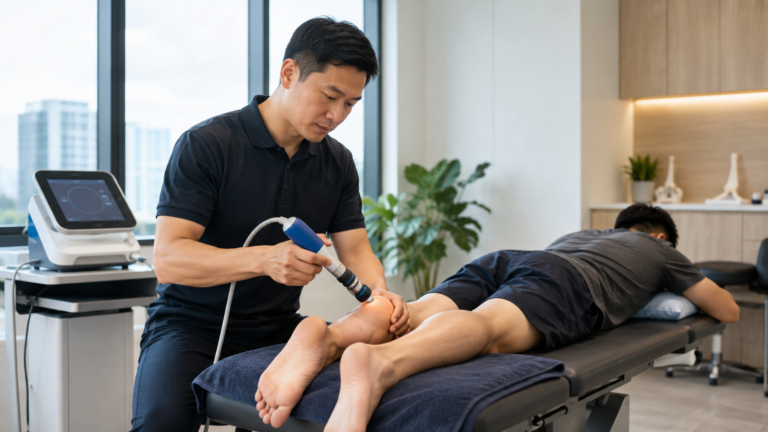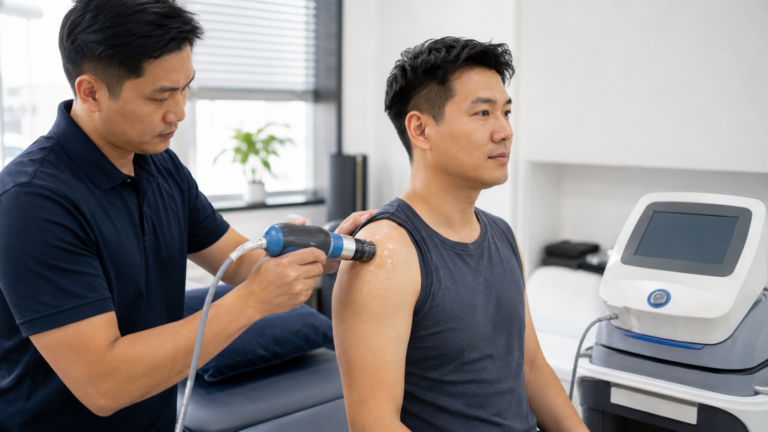

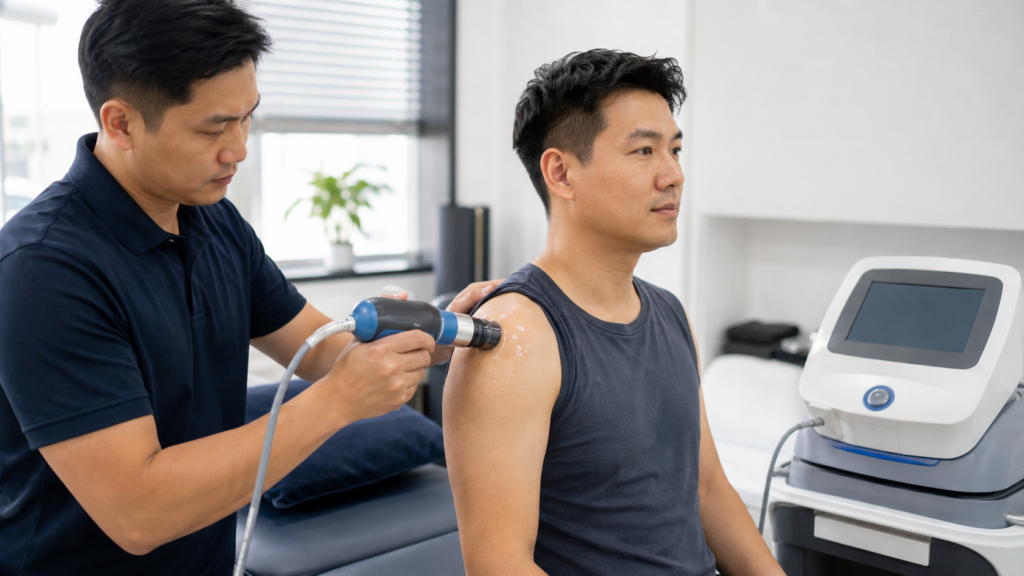
If you have been dealing with heel pain, tendon pain or a sports injury that does not seem to improve, shockwave therapy may be one of the treatment options recommended by your physiotherapist. Shockwave therapy is a non-invasive treatment that uses acoustic waves to stimulate the affected tissue, with the aim of reducing pain and supporting the body’s natural healing process.
For people considering shockwave therapy in Petaling Jaya, understanding what the treatment actually does, what conditions it may help and what to expect during a session can make it easier to decide whether it is suitable for you
What Is Shockwave Therapy?
Shockwave therapy also known as Extracorporeal Shockwave Therapy (ESWT), is a non-surgical treatment commonly used for certain persistent muscle, tendon and connective tissue problems.
Despite the name, there is no electrical shock involved. Instead, a handheld device delivers controlled acoustic or pressure waves through the skin and into the affected tissue. Shockwave therapy is particularly associated with the treatment of chronic tendon problems such as plantar fasciitis, Achilles tendinopathy and tennis elbow. It is often considered when symptoms have persisted despite treatments such as rest, stretching, strengthening exercises or physiotherapy treatments. Unlike surgery or injections, shockwave therapy does not require an incision or injection into the affected area.
How Does Shockwave Therapy Work?
When acoustic pulses reach damaged tissue, they create controlled micro-trauma, a deliberate mechanical stimulus that the body reads as a new injury signal. This restarts the healing cascade where blood vessels form in the area, growth factors are released, collagen synthesis accelerates, and nerve endings in the tissue are desensitised. The result is that degenerated tissue that has stopped healing is prompted to repair.
Shockwave therapy does not suppress pain the way anti-inflammatory medication does. It does not simply relax muscle the way massage does. It actively restarts a biological process that, in chronic conditions, has stalled or stopped.
Why Chronic Injuries Often Do Not Heal on Their Own
Acute injuries usually heal within several weeks through inflammation and tissue repair. Chronic tendon and fascial injuries can behave differently. After several months, the tissue may become degenerative, with reduced blood flow and slower collagen repair.
This is why conditions such as chronic heel pain, tendinopathy, or calcific shoulder pain can persist despite rest and stretching. ESWT provides a new mechanical stimulus that may help restart the healing response.
What Happens During the Twitch
Some patients notice a brief involuntary muscle twitch when the probe passes over a sensitive area. This local twitch response can indicate that the treatment has reached a reactive or trigger point within the tissue.
What Conditions Does Shockwave Therapy Treat?
ESWT is most effective for chronic musculoskeletal conditions, specifically those involving tendons, fascia, and calcified tissue that has failed to heal adequately through conventional rehabilitation. These are the conditions TIO most commonly uses it for.
Plantar Fasciitis — Chronic Heel Pain
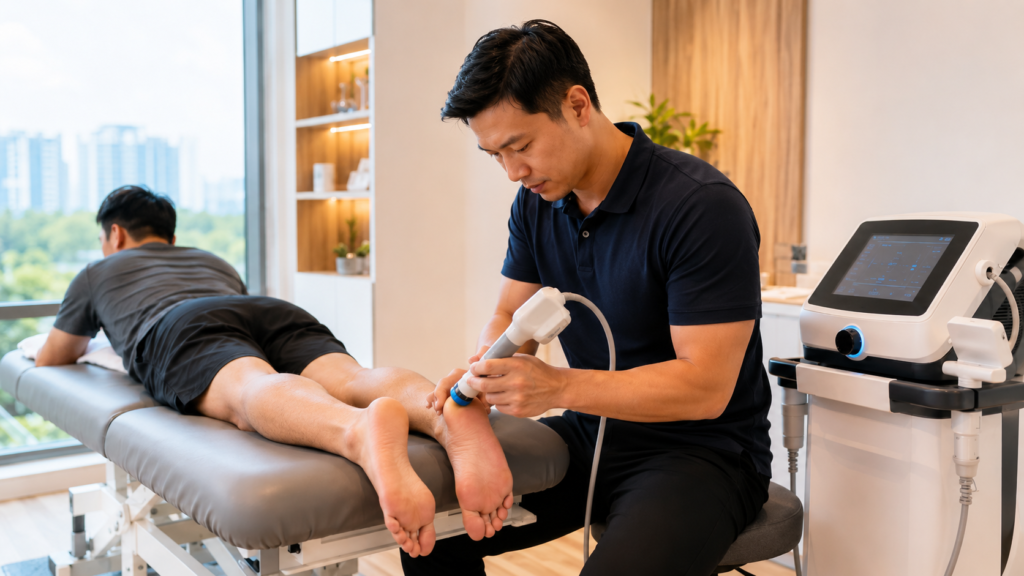
Plantar fasciitis is one of the most common indications for shockwave therapy in a physiotherapy setting. The sharp heel pain that strikes on the first steps of the morning, the ache that returns after sitting for a period and these are the hallmarks of a condition where the plantar fascia, the thick band of tissue running across the base of the foot, has become chronically degenerated rather than simply inflamed.
ESWT has a strong clinical evidence base for chronic plantar fasciitis, and for many patients it achieves meaningful pain reduction after a course of three to five sessions. A detailed look at how shockwave therapy works specifically for plantar fasciitis including why rest alone often fails is covered in our dedicated guide to shockwave therapy for plantar fasciitis.
Achilles Tendinopathy
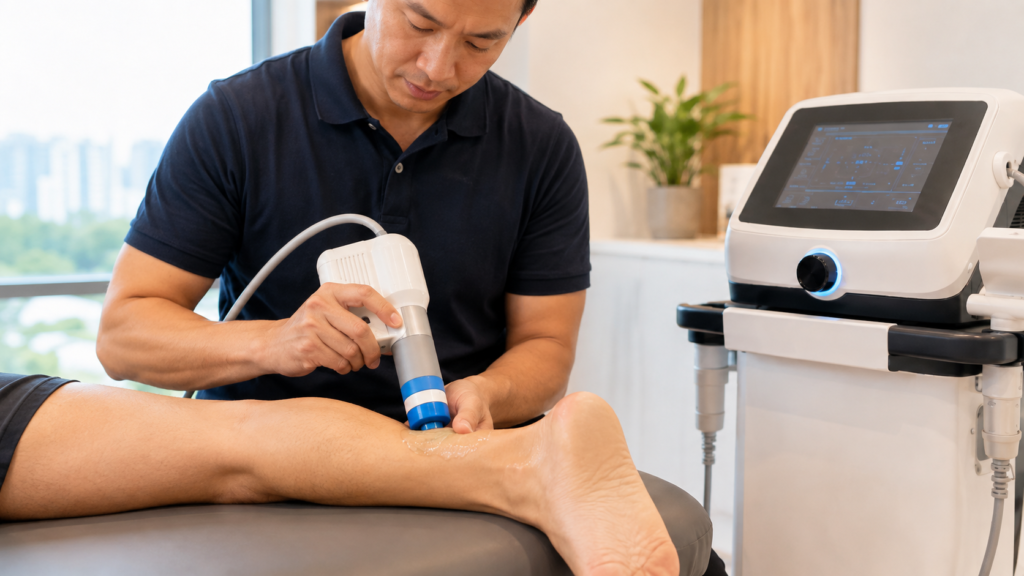
The Achilles tendon that connects the calf muscles to the heel bone is one of the most frequently overloaded tendons in the body, particularly in runners, badminton players, and anyone who stands or walks for extended periods. When it becomes thickened and painful at its midpoint or insertion, rest and stretching alone rarely resolve the problem fully. Shockwave therapy promotes tendon remodelling in a way that progressive loading exercises, while important, cannot achieve on their own.
Rotator Cuff Tendinopathy and Calcific Shoulder
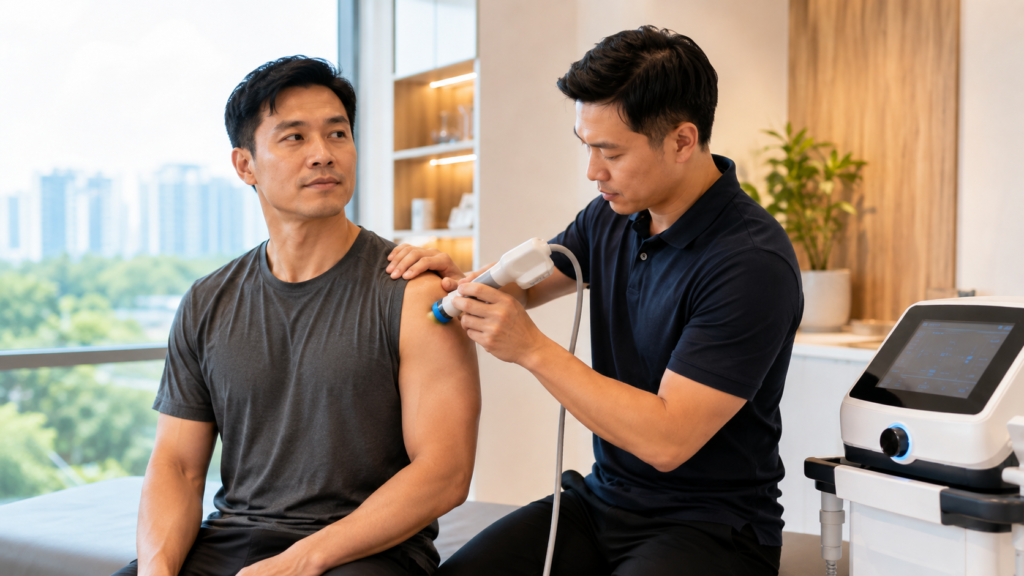
Calcium deposits that form within the tendons of the shoulder such as calcific tendinitis can cause significant pain and restrict movement. Shockwave therapy is effective at breaking down these calcium deposits and stimulating the absorption of the dispersed material, often producing notable relief where injections and physiotherapy alone have been insufficient.
Tennis Elbow and Golfer’s Elbow
Lateral and medial epicondylitis where the overuse tendinopathies at the elbow that produce pain on gripping and lifting respond well to ESWT, particularly in chronic cases where the tissue has degenerated beyond what eccentric exercises and manual therapy can fully address.
Patellar Tendinopathy — Knee Tendon Pain
Pain at the front of the knee, specifically at the base of the kneecap where the patellar tendon attaches, is common in athletes and active individuals. In its chronic form, it can significantly limit function. ESWT combined with progressive loading exercises is currently one of the most evidence-based approaches for this condition.
Chronic Trigger Points and Muscle Knots
Beyond tendon and fascial conditions, shockwave therapy can also be applied to chronically tight muscles with persistent trigger points, particularly in the upper trapezius and surrounding cervical musculature. It works as a complement to dry needling therapy, and the two modalities are sometimes combined when the clinical picture warrants it.
Who Is Shockwave Therapy For?
Patients Who Have Tried Rest and It Is Not Working
Shockwave therapy is specifically designed for the patient. If pain has lasted more than three to six months despite rest, physiotherapy, and activity modification, ESWT may be considered for confirmed chronic tendinopathy or fasciopathy before more invasive treatments.
Patients Who Want to Avoid Surgery
For chronic tendon conditions, surgical intervention is considered a last resort and for good reason. Recovery from tendon surgery is lengthy, outcomes are not guaranteed, and the procedure carries the risks of any operative procedure. Shockwave therapy is positioned in clinical practice specifically as a high-evidence non-surgical alternative. For many patients, a complete course of ESWT removes the need for surgery to be considered at all.
Who Should Not Have Shockwave Therapy?
ESWT may not be suitable for patients with open wounds, active infection or malignancy in the treatment area, pregnancy, certain implanted devices, or those taking blood-thinning medication without medical clearance.
At TIO Chiro & Physio, every patient is assessed before treatment to confirm whether shockwave therapy is safe and appropriate.
What to Expect at TIO Chiro & Physio — Your First Shockwave Session
The Assessment Comes First
Before treatment, your physiotherapist or chiropractor will assess the affected area, review your symptoms, and confirm whether shockwave therapy is suitable. This also helps determine the correct treatment area, intensity, and session frequency.
What the Session Feels Like
Most patients feel a rhythmic tapping or pulsing sensation, with some areas feeling more sensitive than others. Mild soreness may occur for 24 to 48 hours after treatment.
A session at TIO typically takes around 15 to 20 minutes for one treatment area, including any additional therapy or exercises.
How Many Sessions Will You Need?
Most patients undergo around three to five sessions, usually spaced one week apart. Some notice improvement after the first few sessions, while others improve gradually over several weeks as the tissue continues to recover.