
If you have had sciatica before, you know the pattern: weeks of feeling fine, then one long drive sends burning pain down your leg again. Here is why it happens and how to calm it down.
What Causes Sciatica in the First Place?
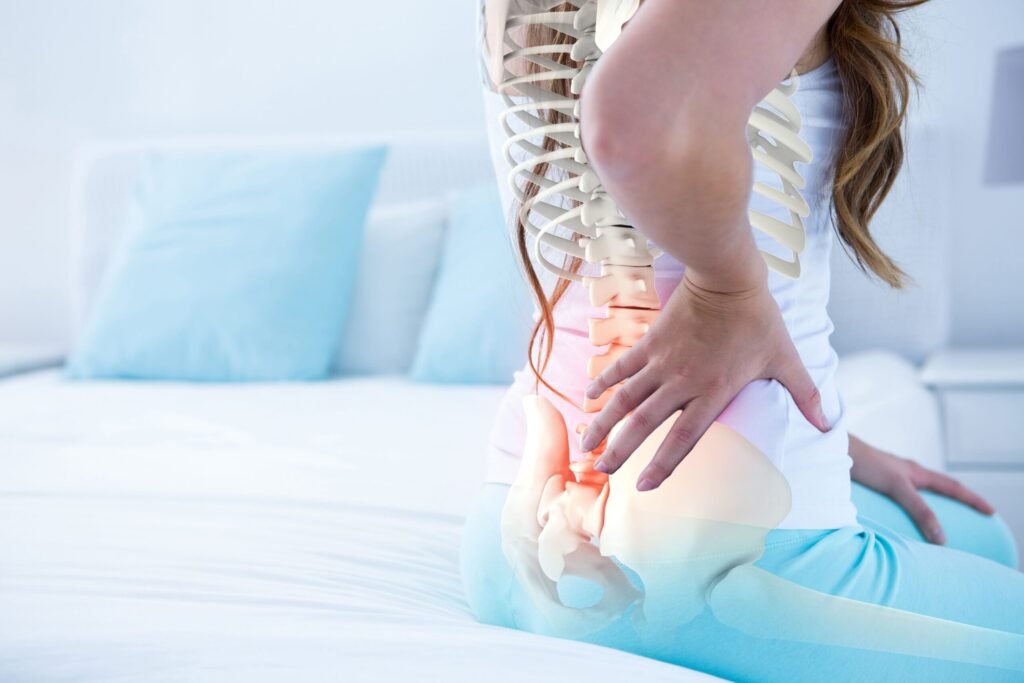
Sciatica describes pain travelling along the sciatic nerve, from your lower back through the buttock and down the back of the leg.
The underlying problem decides which triggers affect you most. Common sciatica causes include:
- A slipped (herniated) disc pressing on a nerve root in the lower back. This is the most frequent cause. Read more about slipped disc treatment.
- Spinal stenosis, a narrowing of the spaces around the nerves, more common after 50.
- Piriformis syndrome, where a tight muscle deep in the buttock squeezes the nerve.
- Spondylolisthesis, where one vertebra slips forward over another.
- Pregnancy, as posture and weight shift during the later months.
Sciatica Symptoms: How to Tell a Flare-Up Is Starting
Sciatica symptoms usually affect one side of the body. During a flare-up you may notice:
- Sharp, burning or electric pain from the buttock down the leg
- Numbness, tingling or “pins and needles” in the leg or foot
- Pain that worsens when you sit, cough or sneeze
- Weakness in the leg or difficulty lifting the front of your foot
Many people feel an early warning sign, such as a dull ache in the buttock or tightness behind the knee, a day or two before the full flare-up.
Seek urgent medical care if you have numbness around your groin or inner thighs, loss of bladder or bowel control, or weakness in both legs. These can signal cauda equina syndrome, a medical emergency.

What Causes Sciatica to Flare Up? 7 Common Triggers
1. Sitting for Long Hours
Sitting loads your lower back discs more than standing does. Eight hours at a desk followed by an hour in KL traffic is one of the most common reasons patients come in with a fresh flare-up.
2. Bending and Lifting the Wrong Way
Picking up a child, a laundry basket or a carton of mineral water with a rounded back puts sudden pressure on the discs. The pain often appears the next morning.
3. Doing Too Little, Then Too Much
Long rest stiffens the muscles that support your spine. When you then jump back into badminton, futsal or a heavy gym session, those unprepared muscles and nerves react.
4. Poor Sleep Position or an Unsupportive Mattress
If your sciatica flares up at night or is worst when you wake up, your sleeping posture may be to blame. Sleeping on your stomach arches the lower back, and a sagging mattress lets your spine twist for hours.
5. Stress and Muscle Tension
Stress tightens the muscles around your hips and lower back and can make your nervous system more sensitive to pain. That is why sciatica often returns during a heavy work month.
6. Tight Hips and Hamstrings
Tight hamstrings and piriformis muscles pull on the pelvis and can press on the nerve.
7. Weight Gain and Pregnancy
Extra body weight adds load to the lower spine. During pregnancy, hormones loosen the pelvic ligaments while the growing bump shifts your posture, so flare-ups are common in the second and third trimesters. Gentle, pregnancy-safe care such as chiropractic care for pregnancy can help.
How to Relieve a Sciatica Flare-Up Naturally
Keep Moving, Gently
Bed rest feels right but usually slows recovery. Short walks of 10 to 15 minutes, a few times a day, keep blood flowing to the nerve and stop muscles from stiffening.
Use Heat or Ice
Try an ice pack wrapped in a towel for 15 to 20 minutes in the first two days to calm irritation. After that, a warm compress can relax tight muscles. Use whichever gives you more relief.
Try These Three Gentle Stretches
Move slowly and stop if pain travels further down the leg.
- Knee-to-chest: Lie on your back, hug one knee towards your chest and hold for 20 to 30 seconds. Switch sides.
- Figure-four (piriformis) stretch: Lie on your back, cross one ankle over the opposite knee and gently pull the lower leg towards you.
- Glute bridge: Lie with knees bent, tighten your buttocks and lift your hips until your body forms a straight line. Hold for 3 seconds, then lower.
Avoid toe-touches, deep forward bends and heavy deadlifts until the flare-up settles.
Fix How You Sit
Sit with your hips slightly higher than your knees and place a small rolled towel behind your lower back. Stand up and move every 30 to 45 minutes. On long drives, stop every hour for a short walk.

When to See a Physio for Sciatica Pain
Home care works for many flare-ups. Book an assessment if the pain lasts more than two weeks, keeps coming back, disturbs your sleep or comes with numbness or weakness.
What Sciatica Treatment With a Physio Involves
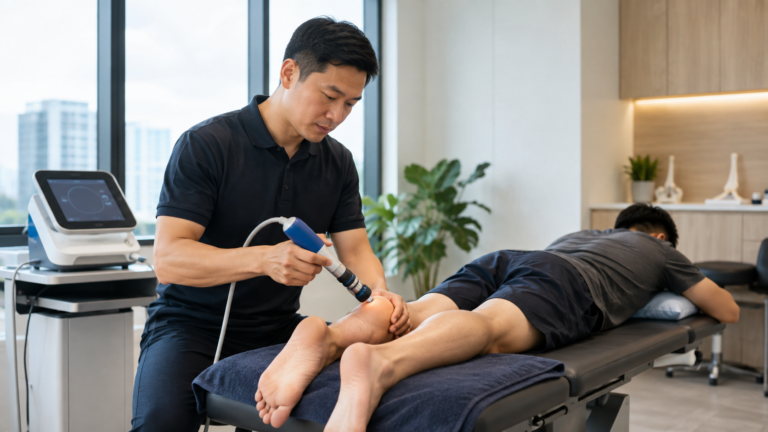
A physiotherapist first finds the source of the nerve irritation, whether it is a disc, a tight piriformis or a joint problem. Physio for sciatica pain then usually combines:
- Hands-on manual therapy to ease muscle tension and improve joint movement
- A tailored exercise programme to strengthen your core and hips
- Dry needling to release tight trigger points in the buttock and lower back
- Posture and lifting advice specific to your work and lifestyle
The goal is not only to calm the current flare-up but to lower the chance of the next one. Learn more about our sciatica treatment and physiotherapy services in Petaling Jaya.